2022-23 season

2022-23 season

Wednesday, March 26, 2014

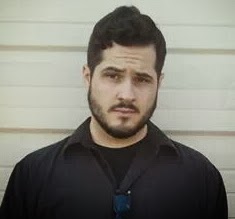
The Rumors Are True: Frank Markus is a Very Funny Man

Frank Markus and Sue Rogers do battle as Lenny and Claire Ganz
Here’s a simple formula for comedy:  Frank + Markus = Funny Man.  He excels at comedic roles and last appeared onstage at the Barn in Red, White and Tuna 2011, playing several over-the-top characters.  In Rumors, Frank describes his character Lenny Ganz as “a guy who wasn't born with a silver spoon in his mouth, and has managed make it to the right side of the tracks by becoming some sort of tax/investment advisor. As such, he doesn't suffer fools lightly and has an acerbic wit that gives him a lot of fun laugh lines in this script.”  Frank relates well to Lenny because they are both “car guys”:  Lenny just bought a new BMW and knows what kinds of cars everybody drives in the play, while Frank admits to being an “inveterate car-lover from birth.” He now serves as Technical Director for Motor Trend magazine and travels the world reporting on the car business and driving almost every new car and truck made.

Frank was attracted to Rumors because “Neil Simon has a real knack for compelling, engaging dialogue, and he's written non-fiction books about the art of writing farce well.”   Unlike many farces that “rely too heavily on lowest-common-denominator sight gags and door-slamming for laughs,” Frank says that “the Rumors script doesn't rely solely on the physical humor, misunderstandings, and shared secrets to get the audience laughing. Rather, the plot and dialogue does that and the gags merely heighten the effect.”  Frank also enjoys being reunited with fellow cast-mates Mary Ann Tweedie and Sue Rogers, who all performed under Cynthia Tuppers’s direction in 1994's The Man Who Came to Dinner.  As Frank says, “it was impossible to pass up the chance to work once again with Cynthia Tupper. Tupper's facility with the farce genre keeps us actors on our toes so that we maintain the fast-is-funny comic timing on which farce relies. Most of us who were cast have worked with Cynthia and/or with each other onstage before, so the cast began this production already fast friends, intimately aware of each other's numerous capabilities and strengths. We've been having a lot of laughs ever since the first read-through.”

Frank was born in Chicago, but raised mostly in Memphis, Tennessee.  To pursue his love of cars, he came north for engineering school to get a job in Detroit's auto industry. After six years as a Chrysler engineer, as he says, “I ran away to join the automotive circus, and have written for and tech-edited car magazines since 1991,” including Motor Trend.  His first Farmington Players’ play was Mister Roberts in 1989.  Frank and long-time partner Michael Smith recently got married on the Barn stage, with the wedding officiated by fellow Rumors cast-mate Jim Moll.

The Farmington Players' production of Rumors runs from April 25 through May 17 and is proudly sponsored by TruVista Wealth Advisors.  Tickets can be purchased online at www.farmingtonplayers.org or by calling the box office at 248-553-2955.


Tuesday, March 18, 2014

Julia Spina-Kilar is the Bad Girl with a Heart of Gold

Julia Spina-Kilar rehearsing as Cassie Cooper with Ross Grossman as Glenn
At first blush, Julia Spina-Kilar is funny, quirky, and a little offbeat.  In that respect, you could say that she’s similar to another hyphenated Julia (Louis-Dreyfus) that has a facility for making people laugh.  Our Julia plays Cassie Cooper in the Farmington Players upcoming production of Rumors, a zany Neil Simon comedy.  In the play, the Deputy Mayor of New York suffers a self-inflicted gunshot wound on his 20th wedding anniversary, and five couples conspire to keep the truth from one another – and the police – as the cover-up spirals out of control in hilarious fashion.

Julia describes Cassie as the “angry, insecure arm-piece for her State Senate candidate husband Glenn.  She enters pushing Glennʼs buttons and threatening divorce. This continues throughout the play, along with her display of deep breathing and crystal ‘worship,’ much to Glennʼs worry. He does not want to tarnish his political image or reputation.  Cassie does not care!”  Julia loves being the “bad girl” in the play, as Cassie goes to extreme lengths to provoke and embarrass her husband.  But as she says, “the challenge is to not have the audience think she is just a constantly nagging witch. Creating a little empathy would be nice. But Iʼm not sure I can, because she truly behaves badly!”  

Julia saw Rumors as a great opportunity for middle-aged actors: “Plum roles for females over 40 are rare and Rumors provides them. Director Cynthia Tupper and I have wanted to work together, so having her direct is a double treat for me. I also enjoy working with this glorious cast! Our different characteristics meld together well. We each ‘fit’ our partners and play off each other with ease.“   The natural chemistry between the couples is important to keep things real, which is essential for farce.  As Julia says, “People enjoy comedy, especially farce, because it is a ‘tick-tock’ away from reality. At the same time, Rumors is a situation people might be able to relate to or at least enjoy watching at a safe distance! People panicking, behaving badly and showing their true colors is most likely somewhere in everyoneʼs experience.”  (When asked to reveal her own “bad girl” experiences, Julia demurred coyly, saying, “I’ll never tell!”) 

Despite her own personal losses, Julia finds fulfillment in bringing joy to people onstage and off: “Sadly, Iʼm a widow and it is odd to be on stage without my husband Ted beaming in the audience. But, it is a joy to perform once again, and Iʼm most honored to have the opportunity to be involved in theatre both on and off the stage at The Barn. Itʼs 'community' theatre, after all! Shows donʼt come together by waving a magic wand. The magic is in the friendly, talented membership and the many opportunities for involvement.”  Julia also gives back in other ways.  She’s a 33-year organ transplant recipient and counsels kidney donors and recipients as a Beaumont Nephrology Peer Mentor. In addition to her many Barn credits, she has also performed with the Power Center, Utah Shakespeare Rep., Birmingham Village Players, and SRO.
  
The Farmington Players' production of Rumors runs from April 25 through May 17 and is proudly sponsored by TruVista Wealth Advisors.  Tickets can be purchased online at www.farmingtonplayers.org or by calling the box office at 248-553-2955.


Thursday, February 20, 2014

Bob Cox Gets His Crazy On As Assassin Giuseppe Zangara

Bob Cox gets a charge out of playing assassin Guiseppe Zangara
While it’s usually good to “follow your gut,” in the case of Giuseppe Zangara, not so much.  Zangara was an Italian immigrant with severe stomach problems that may have affected his mind as well.  He rationalized his attempt to kill President-elect Franklin Roosevelt in 1933 (his bullet missed FDR but killed Chicago mayor Anton Cermak) because he thought wealthy and powerful people were somehow responsible for his bad stomach.  Bob Cox of Plymouth, who plays Zangara in the Farmington Players production of Assassins, says, “I think it also had a lot to do with his feeling that he wasn’t afforded the same opportunities that others were.”

This sense of opportunity lost and dreams unrealized is a constant theme of Assassins, which examines the minds and motives of the nine U.S. Presidential assassins. Bob says that his biggest challenge in playing Zangara is “trying to understand where he is coming from. He is a lower-class immigrant who has struggled with health issues his whole life. Zangara doesn’t feel like there is anybody representing him. Nobody is looking out for his best interest, or even paying attention. He attempts to make them pay attention by taking it to the highest extreme.”  And while some of the assassins appear more logical than others, Zangara is really crazy, which suits Bob just fine:  “I get to scream and shout and yell at people while on stage. Any frustrations I’ve had during the day are all released!”   

Bob’s big musical number is “How I Saved Roosevelt,” which shows an interesting juxtaposition between the media-hungry townspeople, and Zangara, who is strapped into the electric chair awaiting execution.  Bob describes the scene as “bone chilling. There is a very large contrast between the townspeople and I. They are talking about what a great vacation they’re having because they got to see [and save] the President … while I am coming to the realization that nobody will remember me, and that no one agrees or understands my reasoning for the attempt. I think this is the same realization that a lot of the assassins come to at different points during the show and it’s interesting to see how each assassin responds.”

Is there a moral to the story in Assassins?  Bob thinks there’s not so much a lesson to be learned, as there is an attempt to “put the audience in the assassins’ minds and show them what caused each of them to get to their breaking points.”  No one will sympathize with or support the assassins, but as Bob says, “this play is about understanding; not supporting… but understanding. I don’t support their actions, but I can see now what drove them to do the violent things they did. I hope if the audience takes one thing away from this show, it will be an understanding for people who think differently than themselves. I hope they’ll understand how our actions and thoughts are a direct reflection of our life experiences. Perhaps they can apply that understanding to someone who has a different political opinion, or who has different religious views.”

The Farmington Players' production of Assassins runs through March 1st and is proudly sponsored by the Center for Financial Planning, Inc.  Tickets can be purchased online at www.farmingtonplayers.org or by calling the box office at 248-553-2955.


Friday, February 14, 2014

From Booth to Oswald: Nine Reasons to See Nine Assassins

Dan Crosby as Lee Harvey Oswald and David Galido as John Wilkes Booth. / Photo by Jan Cartwright
The Stephen Sondheim musical Assassins opens tonight (Valentine's Day) at the Farmington Players Barn Theater. I recently interviewed David Galido, who plays the enigmatic John Wilkes Booth, and asked him what people will enjoy about the show. His answers – in quotes – are interspersed with my own thoughts about the top nine reasons to see this show.

1.  The History:  You can’t make this stuff up; these guys and gals were real “characters.”  The nine U.S. Presidential assassins (and their targets) were: John Wilkes Booth (President Abraham Lincoln in 1865); Charles Guiteau (President James Garfield in 1881); Leon Czolgosz (President William McKinley in 1901); Guiseppe Zangara (President-elect Franklin D. Roosevelt was thought to be his intended target when he killed Chicago mayor Anton Cermak in 1933); Lee Harvey Oswald (President John F. Kennedy in 1963); Sam Byck (hoped to kill President Richard Nixon in 1974 by crashing a plane into the White House, but his aborted hijacking attempt ended in suicide); Lynette “Squeaky” Fromme and Sara Jane Moore (both attempted to assassinate President Gerald Ford in September 1975); and John Hinckley, Jr. (attempted to assassinate President Ronald Reagan in 1981 in a misguided attempt to impress actress Jodie Foster).

2.  Artistic License:  Okay, you can make up some of this stuff.  Like, what would happen if all the assassins got together in one place at one time?  David said, “What I like most about John Wilkes Booth is the opportunity to play such a charismatic and manipulative character.  The other assassins look to him as their leader and in some cases Booth even convinces them to do the deed or at least sets them on the path to assassination.”

3.  The Process:  It isn’t always easy to play a character based on a real life historical person.  David described the process: “There is a historical record out there that can be used as research.  So you do as much reading as you can, watch documentaries; all of it gives you some insight to the potential thought process of the person who attempted to assassinate a president.  But in the end you are still creating the character; it has to come from you so that the audience sees this character on stage and believes this person is capable of murder.”

4.   You’ll Laugh:  Despite the subject matter, David says this show is flat out “funny.  Granted it’s a dark comedy, and these are some troubled individuals, but it’s very funny. At least in places.”

5.  You’ll Cry:  “At other times it is heart wrenching, watching someone who has lost all hope and truly believes the best action they have left to take, the only thing that might make their life worth something, is to take the life of another human being.”

6.  You’ll Feel:  “I personally don’t always go to see a show or a movie just to ‘feel good’ – sometimes I listen to a song on the radio that makes me cry and I leave it on because that is part of the human experience and I want to feel all of these things – a story that causes bewilderment or outrage is just as meaningful as watching a heartwarming tale of redemption or a laugh out loud slapstick comedy.  Art and theatre can do so many things beyond entertaining.  It can educate and enlighten and this show does those things as well.” 

7.  The Music:  It’s complex, challenging music, even by Sondheim standards.  It can be bold (“Everybody’s Got the Right”) and even beautiful (“Unworthy of Your Love”).  David acknowledges that “Jason Wilhoite has a fantastic voice and great stage presence as the Balladeer; audiences won’t want to miss it.  He and Music Director Rachael Rose have been a great help and given me so much confidence in my singing.”

8.  The Dream:   This show has been called an “interrogation” of the American Dream. (Miskoff, Ashley, "The Interrogation of the American Dream in Stephen Sondheim's Assassins" (2011). Honors Theses.Paper 29. http://diginole.lib.fsu.edu/uhm/29)  David explains, “One of the ways this show will resonate with today’s audience is that each one of these assassins is living in a country that they no longer feel belongs to them.  They were taught to believe in America as the greatest country in the world, where everyone could grow up to realize their dreams and if they worked hard and did the right things they would become rich and happy.  And when these characters figure out that isn’t going to happen for them, they get desperate.  We are living in a country where a vanishing middle class and ever increasing income inequality could create an environment for more and more disenfranchised people.  And as Assassins shows, it only takes one frustrated person, one gun, and one bullet to ‘change the world’.”

9.  The Details:  Opening night will certainly make for a memorable Valentine’s Day date, but if you’ve got other plans tonight, the show runs through March 1st.  There’s even a special President’s Day performance on Monday February 17, with half-price ($9) tickets for students.  The Farmington Players' production of Assassins is proudly sponsored by the Center for Financial Planning, Inc.  Tickets can be purchased online at www.farmingtonplayers.org or by calling the box office at 248-553-2955.


Tuesday, January 28, 2014

Life is No Cakewalk for Barry Cutler as Assassin Charles Guiteau

Barry Cutler (far right) plays Garfield assassin Charles Guiteau (below), who marched to his own demented drumbeat.
As assassins go, Charles Guiteau is pretty obscure.  Most people probably haven’t even heard of the president he killed (James Garfield in 1881), let alone Guiteau himself.  But despite Guiteau’s relative anonymity, that doesn’t stop Barry Cutler from playing him as “larger than life” in the Farmington Players production of Assassins.

Barry describes his character as follows: “Imagine if Zig Ziglar were a nutcase and you have Guiteau in a nutshell.  Guiteau’s glass is always half-full, although what he’s full of can’t really be printed here. He fell nothing short of a certifiable lunatic—a psychopath with an ego the size of the Eiffel Tower, if you will. He shot Garfield because the President refused to make him Ambassador to France.”    Barry is used to playing “colorful characters” and Guiteau is no exception, saying, “I’m having a blast with his 'cakewalk to the gallows,’ Guiteau’s funny and final attempt to prove to everyone that he matters. I enjoy the challenge of making this deeply flawed man seem at least a tad human, but certainly not likable.”

With despicable characters and an uncomfortable subject matter, I asked Barry what audiences would enjoy about Assassins?  His answer: “Not all stories are designed to make audiences ‘feel good.’  That being said, all stories should make audiences ‘feel something.’ People will enjoy the show for various reasons, the entertainment value, the glimpse into parts of history they may or may not have previously explored, and the revelation that each assassin is the ‘hero’ of his own story.  While their goals are abhorrent, in their own minds they want what everyone wants – their own version of The American Dream.”

The American Dream is a prevalent theme in Assassins.  As director Mike Smith says,  "Assassins uses these historical characters to shine a light on the promise and failure of the American Dream which, I think, is as valid an analysis today as when it was first produced. … I relate to what the assassins want because wanting is the American Way. It's never easy to get there by following the rules, but it can be done.” Similarly, Barry understands the assassins’ motives, but to him, the ends do not justify the means:  “The assassins believe they have the right to happiness, whether they pursue it or not, and if they don’t get it, it’s everyone else’s fault.  – A warped version of the American Dream. Personally, I don’t buy it. You want happiness, go find it. There’s no need to wallow in self-pity, or to point fingers.”

Barry’s played numerous characters since joining the Farmington Players in 2006, having last appeared on the Barn stage as “Mushnick” in Little Shop of Horrors:  “I joke with Jason Wilhoite (the Balladeer) that this our fourth duet on the Farmington Players stage. If I can stay on two feet cakewalking up the stairs, it could be one of our best.”

The Farmington Players' production of Assassins is proudly sponsored by the Center for Financial Planning, Inc.  The show runs from February 14 – March 1. Tickets can be purchased online at www.farmingtonplayers.org or by calling the box office at 248-553-2955.

Tuesday, January 21, 2014

Michael Soave is Well-Suited as the Santa Assassin, Samuel Byck


Michael Soave plays the Santa clad assassin, Samuel Byck (below), who attempted to assassinate President Nixon in 1974.


With his GQ look, Michael Soave conveys an image of suave sophistication, which is ironic given that his character in Assassins is anything but. Michael plays Sam Byck, who like many of the outsiders portrayed in the show, “felt the entire world was against him, including the government.” On February 22, 1974, Michael explained that Byck “attempted to assassinate President Richard Nixon by hijacking a 747 airplane and crashing it into the White House.”  (While Byck’s plane never got airborne, he ultimately killed a few people onboard, including himself.)   In the play, the Byck character appears in a Santa Claus suit, which the real-life Sam Byck once wore to a political protest.

In Assassins, Michael describes the Sam Byck character as “an interesting guy; fun-loving, bipolar, narcissistic and crazy. One second I'm jolly and singing a song and in the blink of an eye I turn explosively angry. The sudden shifts in mood are probably what I enjoy the most, but at the same time are the most challenging just because there's so much back and forth with myself. Sometimes it’s even a little scary because acting crazy came a bit to naturally for me.”

In real life, Michael is a stand-up comedian from Detroit, which might explain his crazy side. He is making is theatrical debut in Assassins because “I enjoy Stephen Sondheim's work and I'm also a fan of darker things, so this was right up my alley. Also I find it easier to identify with my character, Byck, just because he's like an everyday Joe. Working odd jobs just to make it by and then all this crap goes wrong in his life. We've all had times in our lives where we thought the world was taking a crap on us. Byck just took it too far.”

While the show does not try to justify the assassins’ actions, Michael explains that Assassins is “full of underdog, anti-hero characters who take it upon themselves to become vigilantes. Everyone loves an underdog story.”  Even if it’s hard to root for them, it is interesting to try to understand each of the assassin’s rationale for doing what they did.  As Michael says, it’s “different for everyone. Some characters want to be remembered, some just want to be noticed and some just want revenge.” 

When he’s not doing stand-up, Michael’s hobbies include magic, juggling and cooking, and watching horror movies. He’s also a self-taught hypnotist. 

The Farmington Players' production of Assassins is proudly sponsored by the Center for Financial Planning, Inc.  The show runs from February 14 – March 1. Tickets can be purchased online at www.farmingtonplayers.org or by calling the box office at 248-553-2955. 

Thursday, January 16, 2014

Barbara Bruno Finds her Inner Outsider as Assassin Sara Jane Moore

Barbara A. Bruno plays Sara Jane Moore (below in 1975 after Moore's attempted assassination of President Ford) 

The American Dream is an essential theme of Assassins, a dark Stephen Sondheim musical that explores the minds and motives of nine US Presidential assassins.  With songs like Everyone’s Got the Right (to be Happy) and Another National Anthem, Sondheim shows how people who have been marginalized by American society still try to justify their own actions in the name of the “pursuit of happiness.”  While not condoning the assassins’ actions, Sondheim demonstrates that when their dreams are not fulfilled, the assassins feel justified in making someone pay – in this case, a President.

In the Farmington Players production of Assassins, Barbara Bruno makes her Barn debut as Sara Jane Moore, who fired a shot at President Gerald Ford in 1975.  While this is not your typical “feel good” musical, according to Barbara, she finds that Sondheim’s work “tends to be a little unsettling to audiences, but in a way that is thought provoking. When I read the script for the first time, I had a lot of, ‘Gee, I never knew that’ moments, which can be a gratifying experience.” Barbara describes Moore as having a “really frenetic background, with a number of careers and husbands in her time. She's this odd mix of soccer mom and psychopath. The challenge of this role is to not only make her sympathetic so that the audience can relate to her, but to balance this calm exterior of who she really was with this hectic and flighty scripted interpretation of her.”

Barbara can definitely relate to the play’s message that the American Dream has left many people behind, as she explains: “Not unlike many people in the theater, I was a total outsider well into college. There's a rage that comes from not feeling accepted and feeling marginalized.  I grew up in a fairly well off community, but we never had a lot of money.  I felt the differences in class deeply.  The hardest part is feeling not only like you're excluded and will never have what you perceive everyone else has, but also feeling like you don't matter, and I know that I had my ways of acting out on that.”   In relating this to the characters in Assassins, she says, “What's tragic about these people is that they lacked the power to feel like they belonged and that they mattered.  I think, as a rule, people tend to get in trouble when they look to external signals for acceptance, which is, unfortunately, the most common manifestation of the American Dream.”

Originally from Long Island, Barbara lived in Chicago for 20 years, often working on the production side in the Chicago theater community.  She moved to Michigan about three years ago and has been active backstage at the Barn and appeared in the Barn’s AACT Festival entry as Lita Encore in Ruthless.

The Farmington Players' production of Assassins is proudly sponsored by the Center for Financial Planning, Inc.  The show runs from February 14 – March 1. Tickets can be purchased online at www.farmingtonplayers.org or by calling the box office at 248-553-2955.
ShareThis